
Microneedling
Standard
Conventional microneedling for uneven texture and selected scars.
- Price
- $230
- Appointment length
- 100 min

Treatment technology


Share a link to this article.
General information to support your consultation.
Both use fine needles. RF microneedling also delivers radiofrequency energy. Here’s what that difference means for your appointment.
Microneedling and RF microneedling can both be considered for uneven skin texture and selected acne scars. The difference is how they treat the skin: conventional microneedling uses needles without RF energy, while RF microneedling adds controlled heating.
Fine needles create small, controlled punctures in the skin. The healing response stimulates collagen production, which can gradually make certain scars and fine lines less noticeable and improve uneven texture.
At One Beauty Space, the Microneedling appointment is listed separately from Matrix RF microneedling. A pen-shaped device does not tell you whether a treatment includes RF; ask which device and method will be used. Conventional microneedling does not deliver radiofrequency energy.
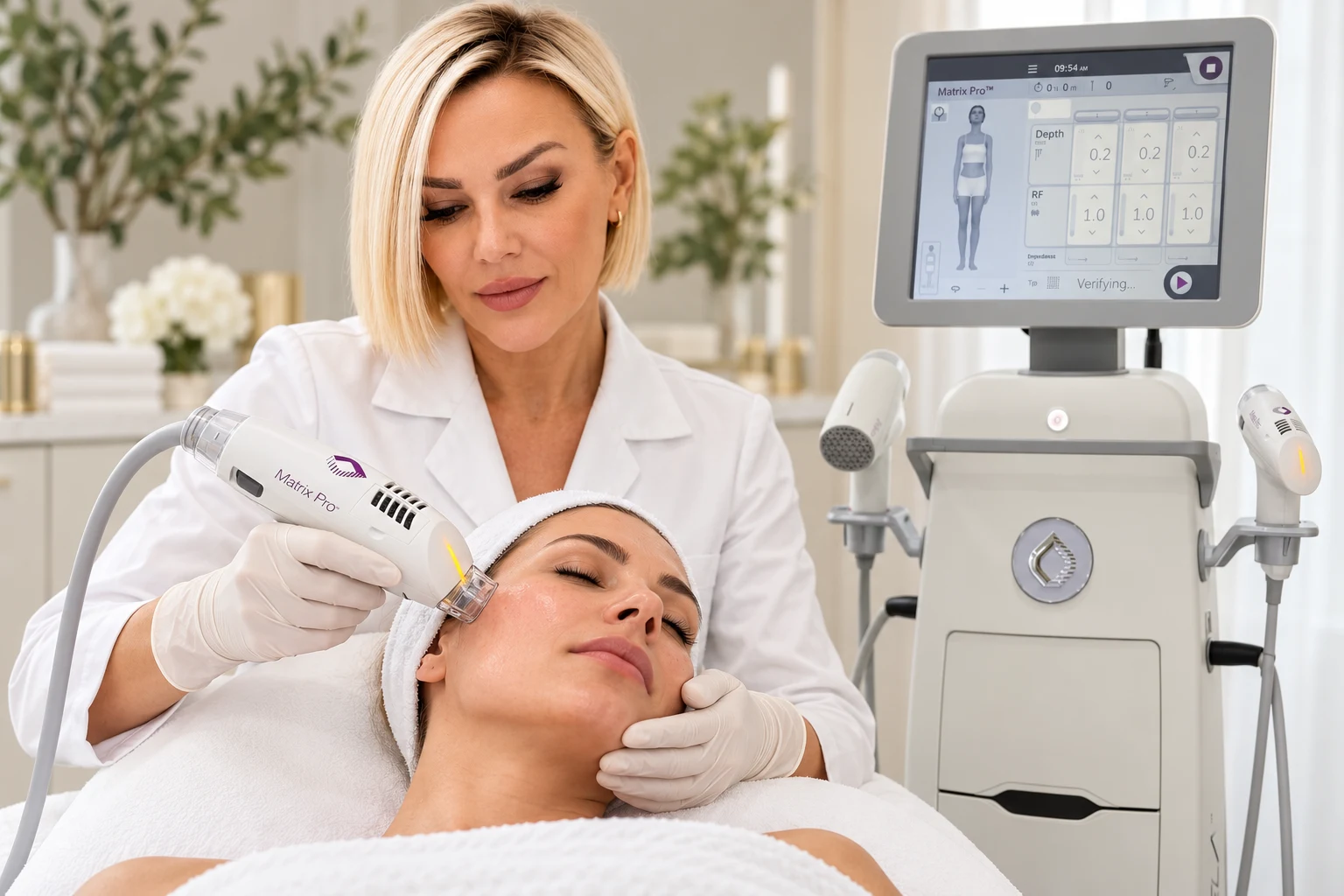
Matrix Pro is the RF microneedling applicator on our Candela Matrix platform. Its microneedles deliver radiofrequency energy into the skin, creating controlled heating as well as the needle treatment. This provides another way to stimulate the skin’s collagen response.
The device allows the provider to select treatment depth and RF energy. The settings and treated area are part of an individual plan, rather than a standard ‘stronger’ version of a conventional microneedling facial. Matrix Pro is also distinct from the Sublative and Sublime applicators on the same platform.
For acne scars, the type and depth of the scars matter more than choosing the treatment with the most energy. Both methods may be considered for selected texture concerns. RF may also be discussed when fine lines or mild skin laxity are part of the concern.
A flat brown mark, an indentation, and skin that feels less firm are different concerns. Explain which bothers you most. Your skin tone, sensitivity, active breakouts, and previous treatments also help determine which approach is appropriate. RF is not automatically the better choice for every person.
Both treatments can leave skin red, swollen, or sensitive while it recovers. Appointment length and recovery time are different: a shorter visit does not necessarily mean less recovery. Ask when you can return to makeup, your usual skin care, and other activities.
RF adds heat-related risks, including burns and scarring, so seek a licensed medical provider trained in RF microneedling. Share your medications, history of pigment changes or unusual scarring, and recent procedures. Review the expected improvement, comfort measures, aftercare, and follow-up before deciding.
No. Our conventional Microneedling appointment and Matrix Pro RF microneedling are separate services. Check the selected treatment and area before choosing a time.
No. The appropriate settings depend on the device, treated area, skin, and concern. More energy is not a substitute for a treatment plan and can increase risk.
Not necessarily. Discuss the concern you want to address first. Your specialist can explain whether one approach or a sequence of treatments makes sense, including the spacing and recovery between visits.
Microneedling: Standard
