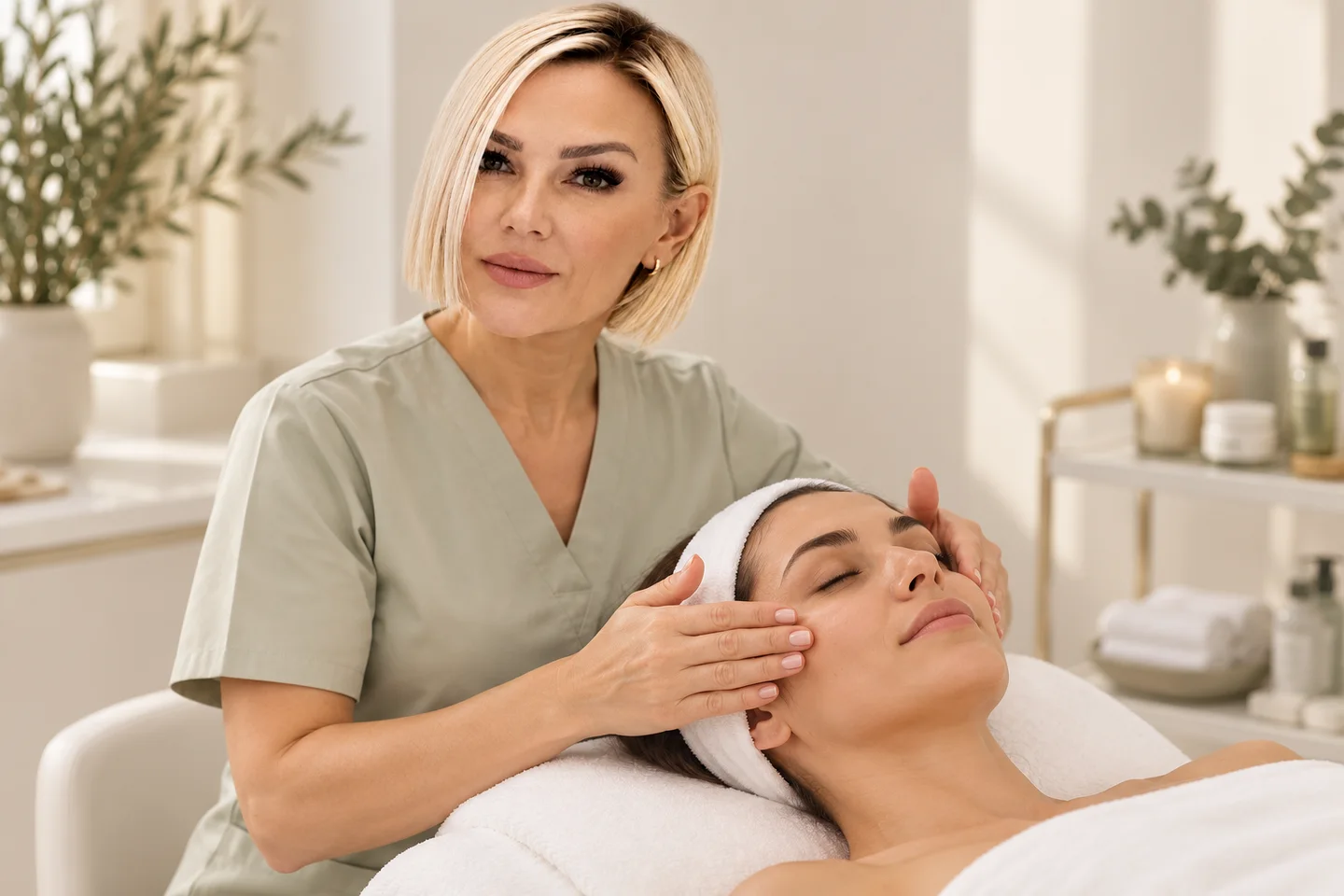
Relaxing & Lifting Face Massage
Standard
A multi-step facial that combines skin cleansing, relaxing and sculpting massage, and hydrating finishing care for a complete facial refresh.
- Price
- $160
- Appointment length
- 60 min
Skin care


Share a link to this article.
General information to support your consultation.
A practical starting point for a simpler routine, with room for your skin, preferences, and daily life.
Before adding another product, take a look at your current routine. Which products feel comfortable? Which do you skip? What are you hoping each step will do? These questions help your specialist understand what is working for you and what you would like to change.
Think about your day as well as your skin. The time you have, whether you wear makeup, and what you find easy to maintain all matter. A manageable routine with a clear purpose is more useful than a long list of steps you rarely follow.
The American Academy of Dermatology recommends gentle cleansing, an appropriate moisturizer, and daytime sun protection. Its guidance places cleansing before treatment products, followed by moisturizer and/or sunscreen. Follow the individual directions for any prescribed products.
For outdoor daytime exposure, the AAD recommends broad-spectrum, water-resistant sunscreen with SPF 30 or higher. Choose a product that suits your skin and follow its label. Clinic treatments do not replace ongoing sun protection or a practical home routine.
Bring one main question to your specialist: what is missing, what is unnecessary, or what needs further assessment? Ask how a proposed product fits with what you use already. You do not need to replace your entire routine at once.
Using too many products can irritate the skin, especially when several target signs of aging. Persistent irritation or an unexplained change needs assessment rather than repeated product swaps. Do not stop a prescribed treatment or replace medical advice with an online trend.
Before a facial, IPL, laser, peel, or RF procedure, ask for instructions specific to your treatment. Preparation and aftercare differ, including when to pause or restart exfoliants, retinoids, or other active products.
Aim for a routine you can explain simply: what you use, why you use it, and when to ask for help. Your specialist can help connect your daily care with the treatment plan, while your response and comfort guide future adjustments.
Relaxing & Lifting Face Massage: Standard
